










Go Anyway
Field Notes from Java


BOGOR
Hill station
Java is loud. Over half of Indonesia’s 285 million people live on an island that’s smaller than New York, and from the saddle of a motorcycle, this statistic becomes overwhelmingly rowdy. One village barely ends before the next begins; houses press against workshops, against grocery stores, against eateries, all boiling over onto the road like angry stew. The tropical August heat presses down on everything, and just when you feel like you might suffocate, rice fields interrupt the scene with an occasional yawn of green.
West Java alone has more than 23 million registered motorcycles – most of them scooters with howling exhausts – and within a day’s ride it feels like we have met each one personally. They materialise between trucks and from invisible alleyways, carrying entire families and all sorts of improbable cargo. Most of the riders are helmetless and wearing slippers. For a moment we feel overdressed, but then we realise the only thing standing between us and the burn of another bike’s metal pipes are our shin-high boots.
Bogor’s Chinatown street is as good a place as any to orientate ourselves on foot. Our tastebuds get an orientation too – it is an explosion of colour and flavour in a few short kilometres, offering up everything from noodles to sundried tuna to neon pink chicks in a basket – live, but not for eating in their current state.


PELABUHAN RATU
Coconuts & chickens
Have I talked about the humidity yet? As we descend from hilly Bogor to the surfer's coast of Pelabuhan Ratu, the air thickens like soup. So does the traffic, if that is even possible.
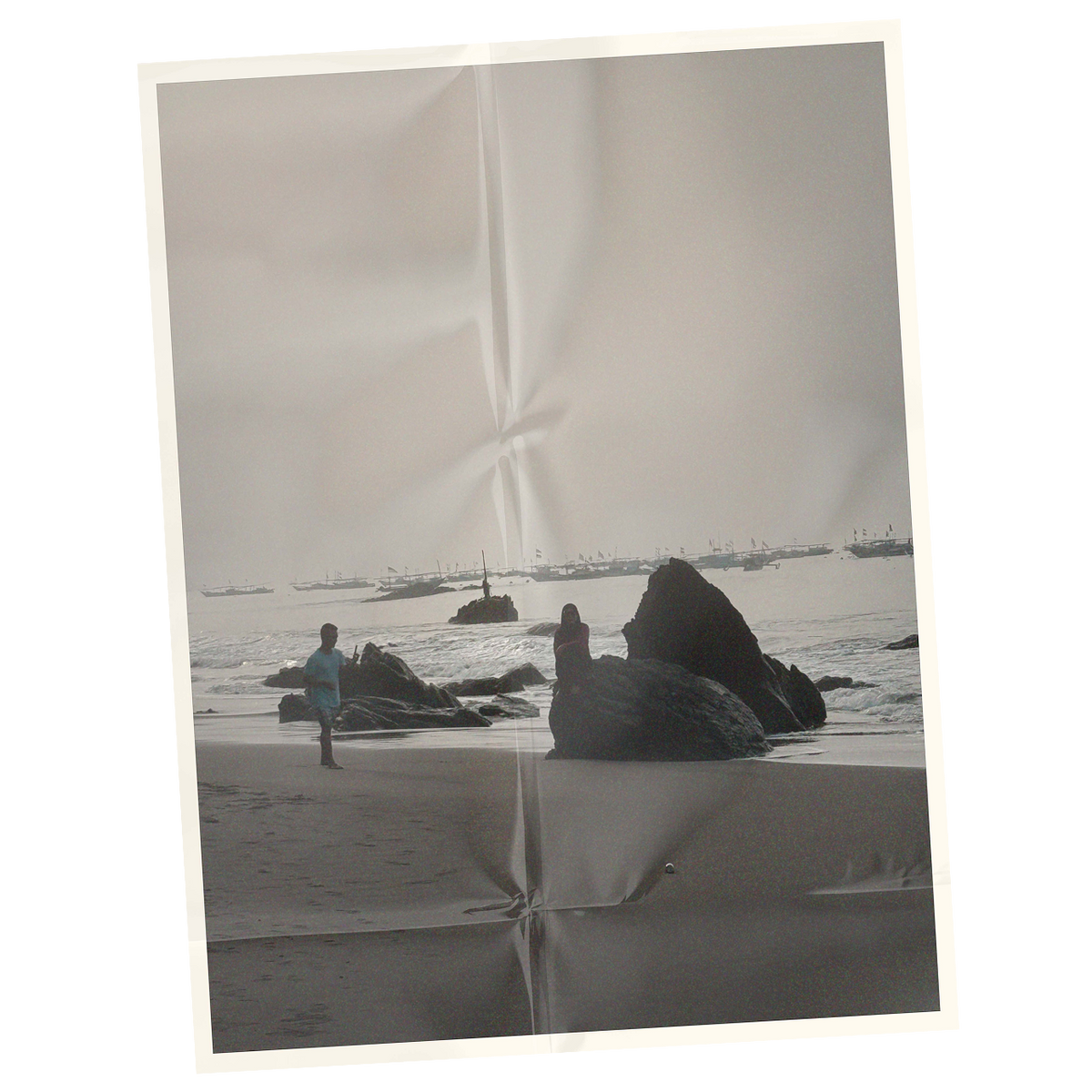
The roads that hug this horseshoe-shaped bay – the largest on Java’s Indian Ocean coast – swing wildly up and down like a rollercoaster of screaming scooters. Sundanese belief holds that this is the domain of Nyai Loro Kidul, the Queen of the Southern Sea, who is no doubt responsible for the enormous, unpredictable waves that the bay is known for.
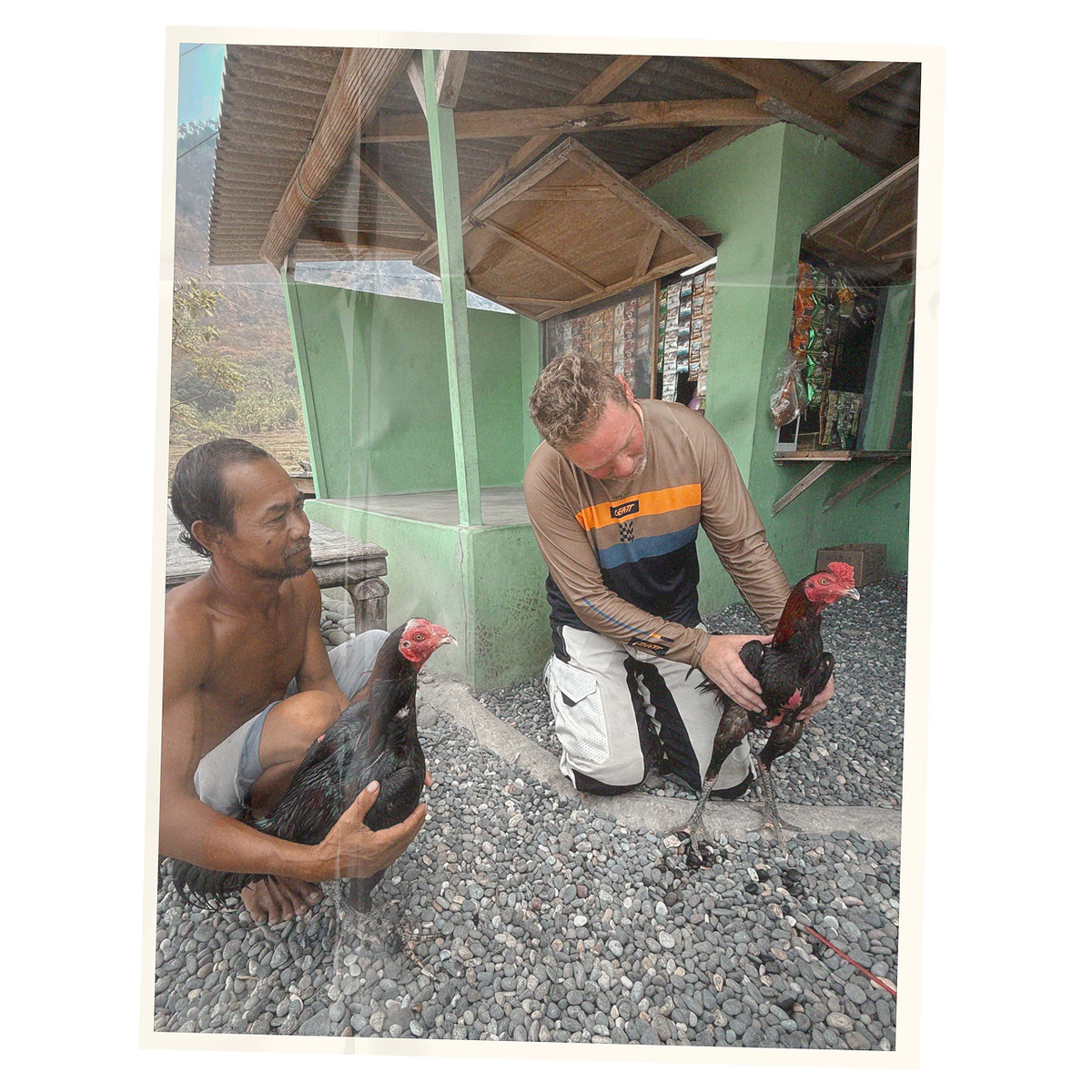
It’s a shoreline that calls for cold beers, colder coconuts, and... bird violence. Sabung ayam – cockfighting – runs deep in Java’s culture. Two sea-burnt locals exhibit their prized roosters outside their wicker cages; they notice our curiosity and laughingly offer to let us handle the animals. The roosters are heavily scarred and taut with angry muscle. This is what it feels like to hold a loaded gun, I think.
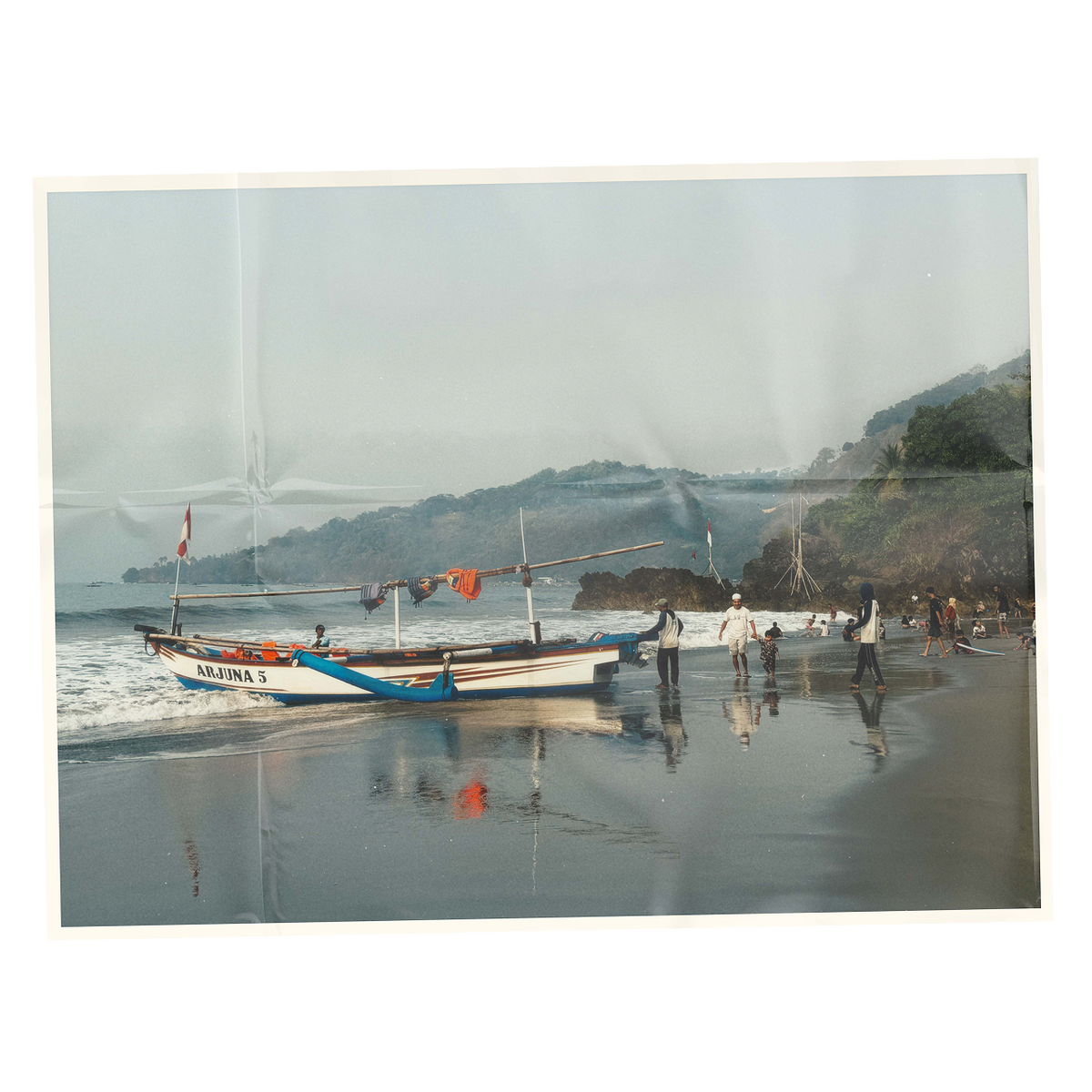
As night falls, bronzed human bodies retreat from the surf, and the bay is taken over by hundreds of glowing eyes – the lights of wooden fishing boats pressing down on the shore.




GELAR ALAM
Journey, place & permanence
We climb from Java's relentless density into one of the island's remaining great rainforest landscapes, where the road gets smaller, the air cooler and eventually the forest swallows almost everything.
The ride itself is a rough pilgrimage. 22km of steep, loose rocks snaking up into the misty lungs of Mount Halimun; narrow, slick and treacherously inclined in some parts. Chris, on a stock CFMoto MT450, is not short on skill nor lacking in horsepower, but I struggle on my heavily-modified Honda CRF250L, way too tall and breathless even with 2nd gear fully wrung out.
I imagine it must be a hellish journey in the rainy season, when mud and humidity would surely steal traction and a rider’s will to live.
At the end of that four hour ride, 1,200 metres above sea level, lies what we seek: an indigenous Sundanese community that reveres nature, ancestral wisdom, and the patient rhythms of rice cultivation.
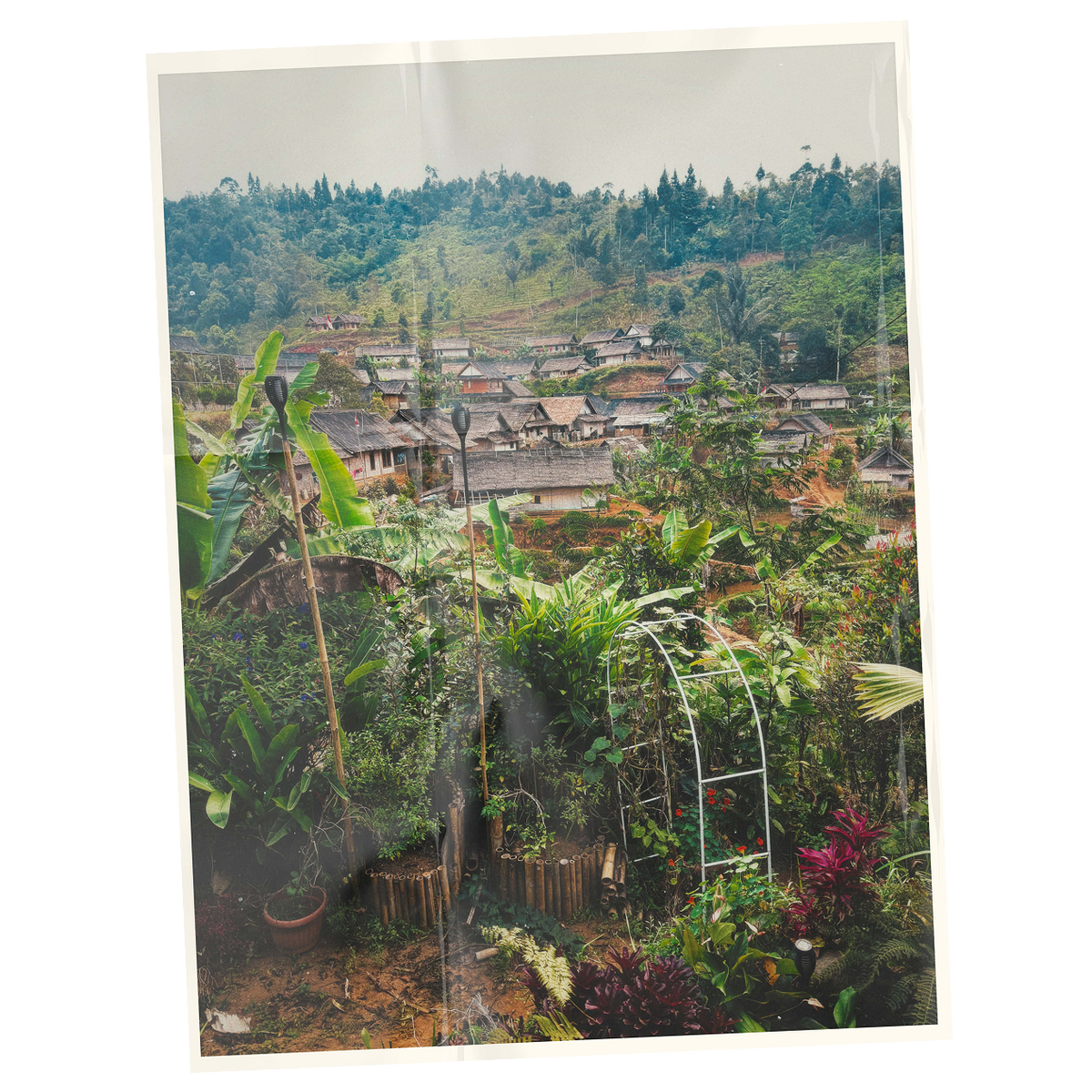
Gelar Alam. The name translates to “a window onto nature”. Calling it an ancient village isn't quite right: the Kasepuhan tribe here is a living, migrating archive of more than six centuries of history – far older than the nation of Indonesia itself. Guided by ancestral visions, the community has relocated 20 times through the mountains. Rather than a point on the map, belonging and permanence is tied to the ideas that people carry with them.
And this is what they believe: that life, like sun and moon, earth and sky, modernity and tradition – is all about finding balance, not forcing control.


KANG YOYO
“Smoking never killed anyone"
“If you are not dead, why would you build earth over your head?” Fair enough. As one villager points out, there is a reason why their houses are made of bamboo and thatch, not clay tiles. The most striking structures in the tiered fields are the conical rice granaries, which store 168 types of ancestral seeds, and a grain surplus that could last a staggering 95 years.
We will spend the night in one of these houses, as guests of Kang (brother) Yoyo. He is an artist, advisor to the village chief, and something akin to Shaman, although the English word might be too small for the job.
He exhales Kasepuhan stories through a continuous veil of nicotine – cigarettes are how he communes with the spirits, and “smoking never killed anyone.” We weigh these words against the fact that not a single hospital or clinic has existed in this remote village, although it is clearly wired up to electrical comforts and the illuminating glow of the Internet.
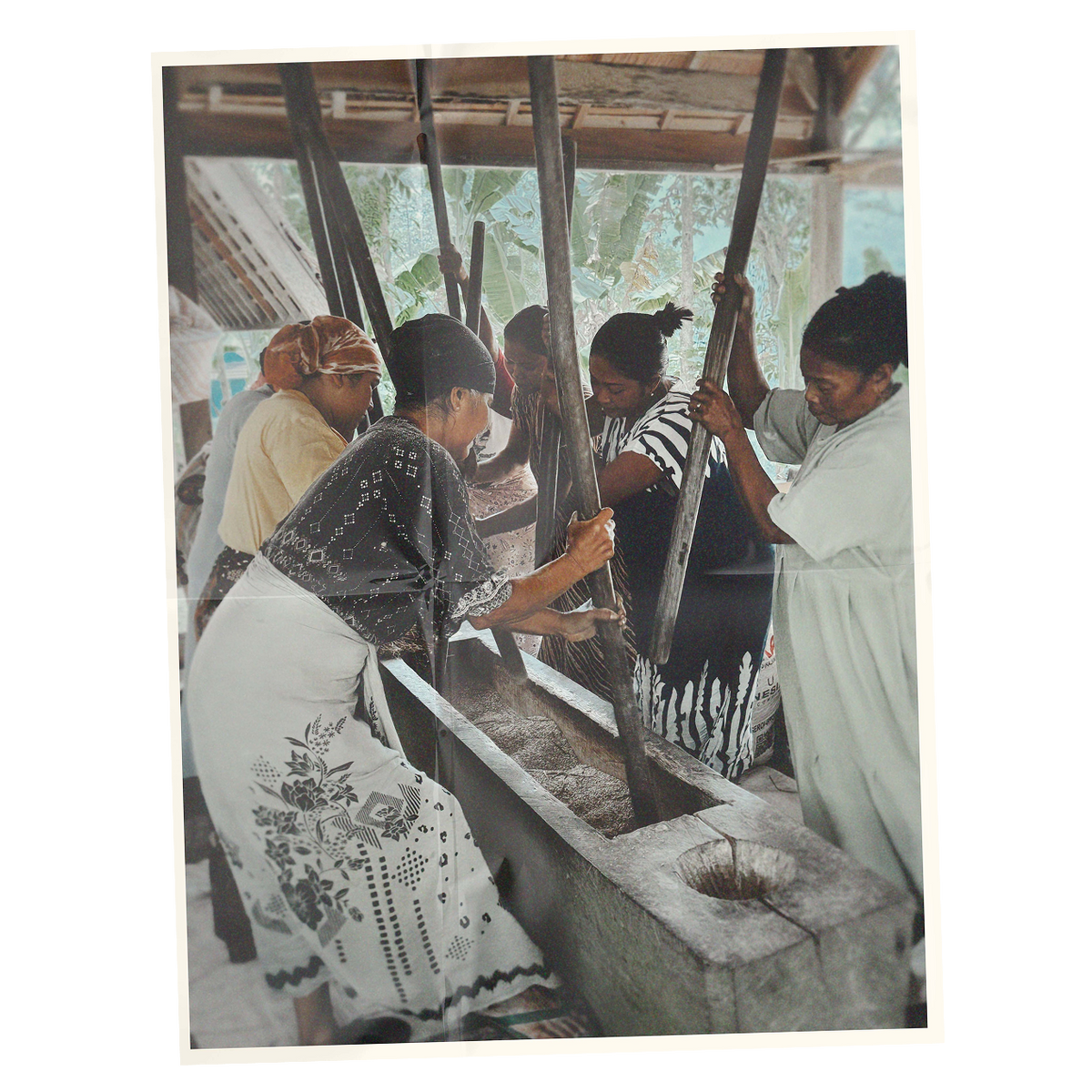
In fact, hardly anything gets killed here if not for food or acts of nature. Kang Yoyo explains that they shun pesticides – and tractors. Rice is a sacred inheritance, harvested only once a year, and cannot be sold, only shared. At the dining table, the rice is served out of a single communal basket that doesn’t get passed around; instead, the person sitting nearest to it spoons portions out on everyone’s plates.
It's been a harsh ride in, and we’re glad to be sitting full-bellied and barefoot in the mountain chill of a wildly fascinating world, ready to bed down to cricket song.
But first we must greet the chief.


MEETING ABAH
King of old and new
Visitors are always brought to see Abah. This takes place in the Imah Gede, a ‘Big House’ that is the epicentre of social activity. Here, the central hearth fire never goes out, women gather to prepare communal meals, while the elders sit cross-legged, smoking and marinating in a slow pleasantness.
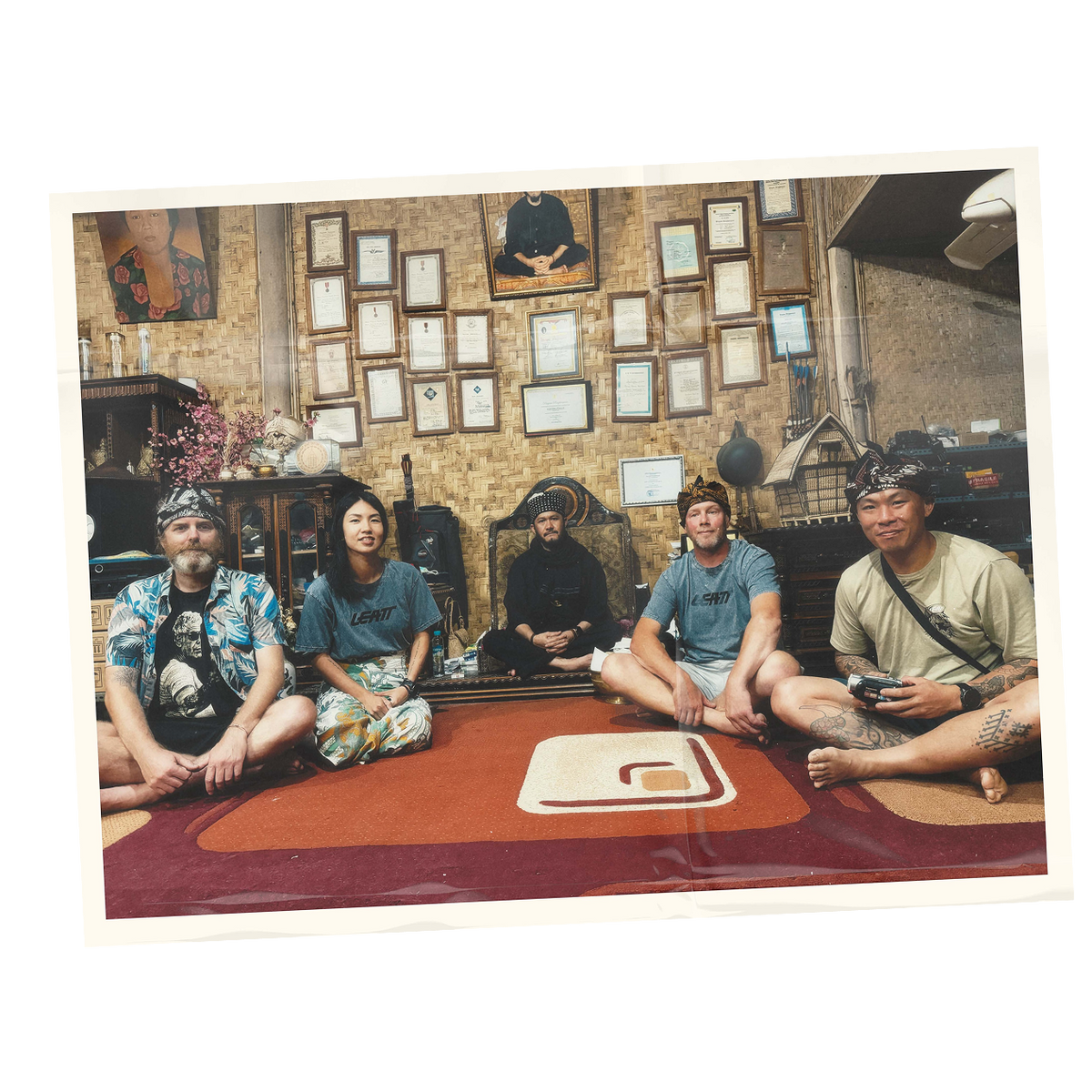
As a show of respect, we are in traditional garb – a headcloth for Chris and Fraser, and a wraparound skirt for me.
Abah is the Sundanese word for father. In many ways he is that - the spiritual, cultural and political parent of the community, the conduit of ancestral messages on when to sow, harvest or uproot. He is born into this role and carries it for life, as did his father.
In the room where Abah holds court, there are already a woman and an elder kneeling in front of the raised deck where he sits amid little condominiums of cigarettes. Abah has his head bowed over them in a prayer of sorts. Meanwhile we follow what Kang Yoyo does, dropping to our knees on the dusty carpet, crawling forward to sit cross-legged in a silent queue before the dais.
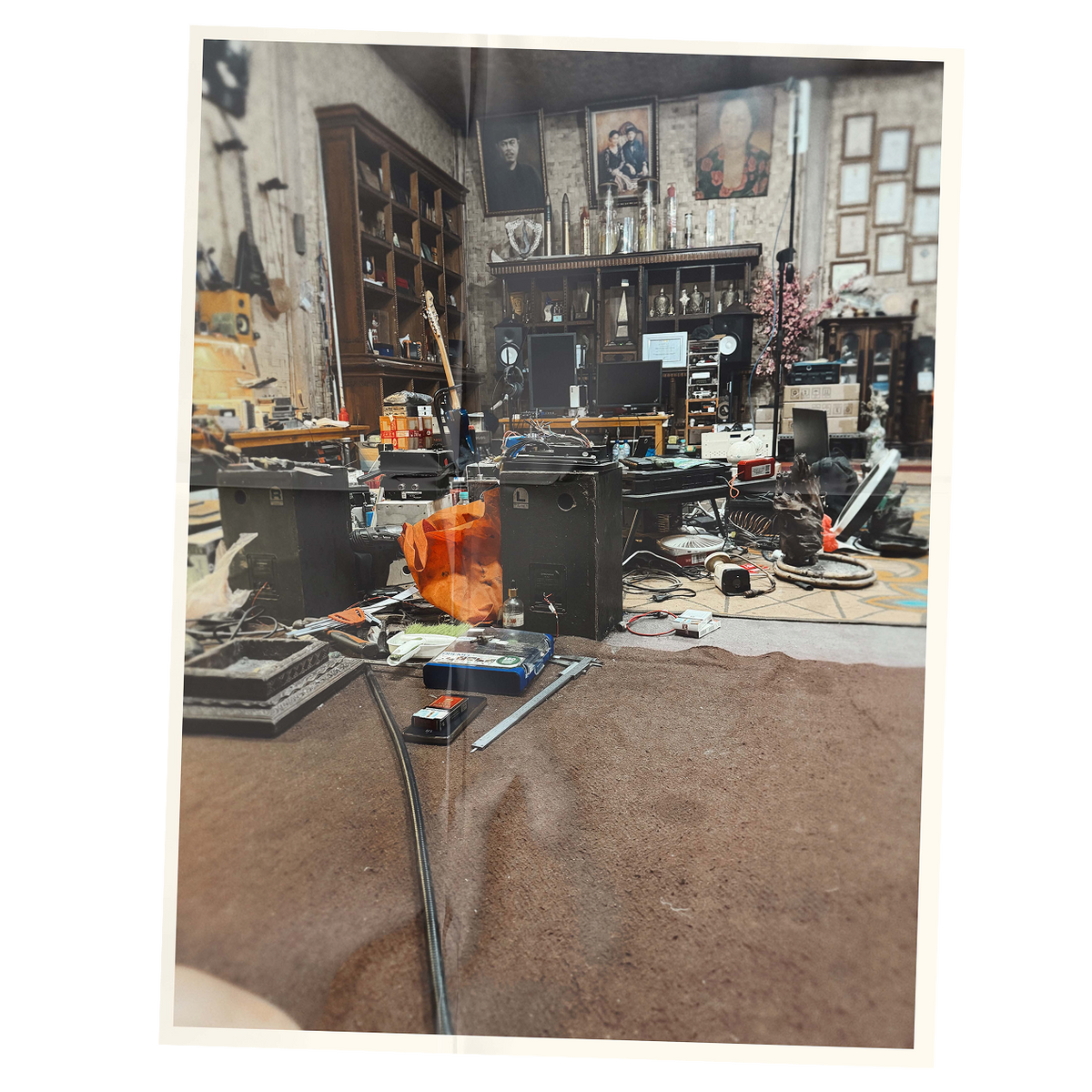
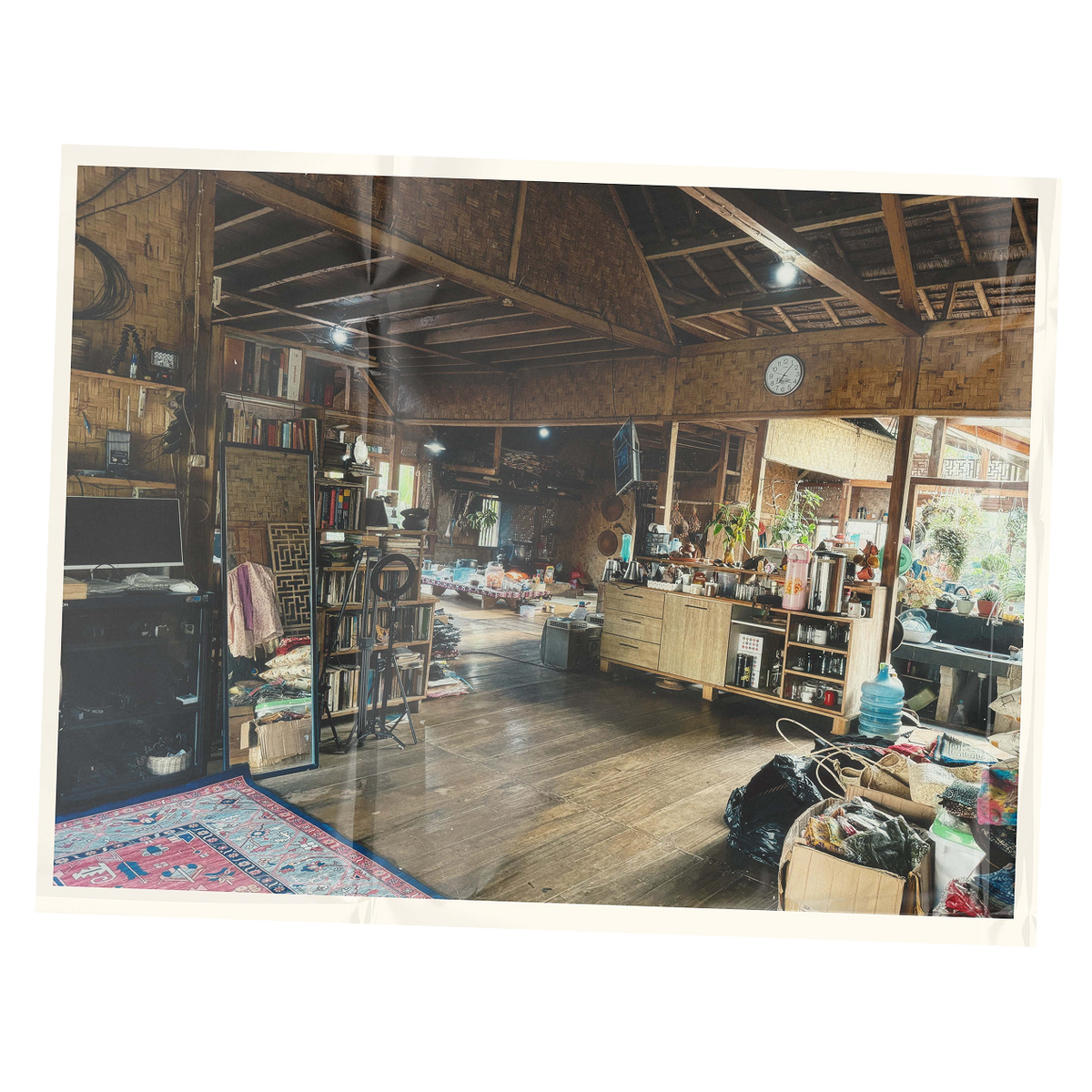
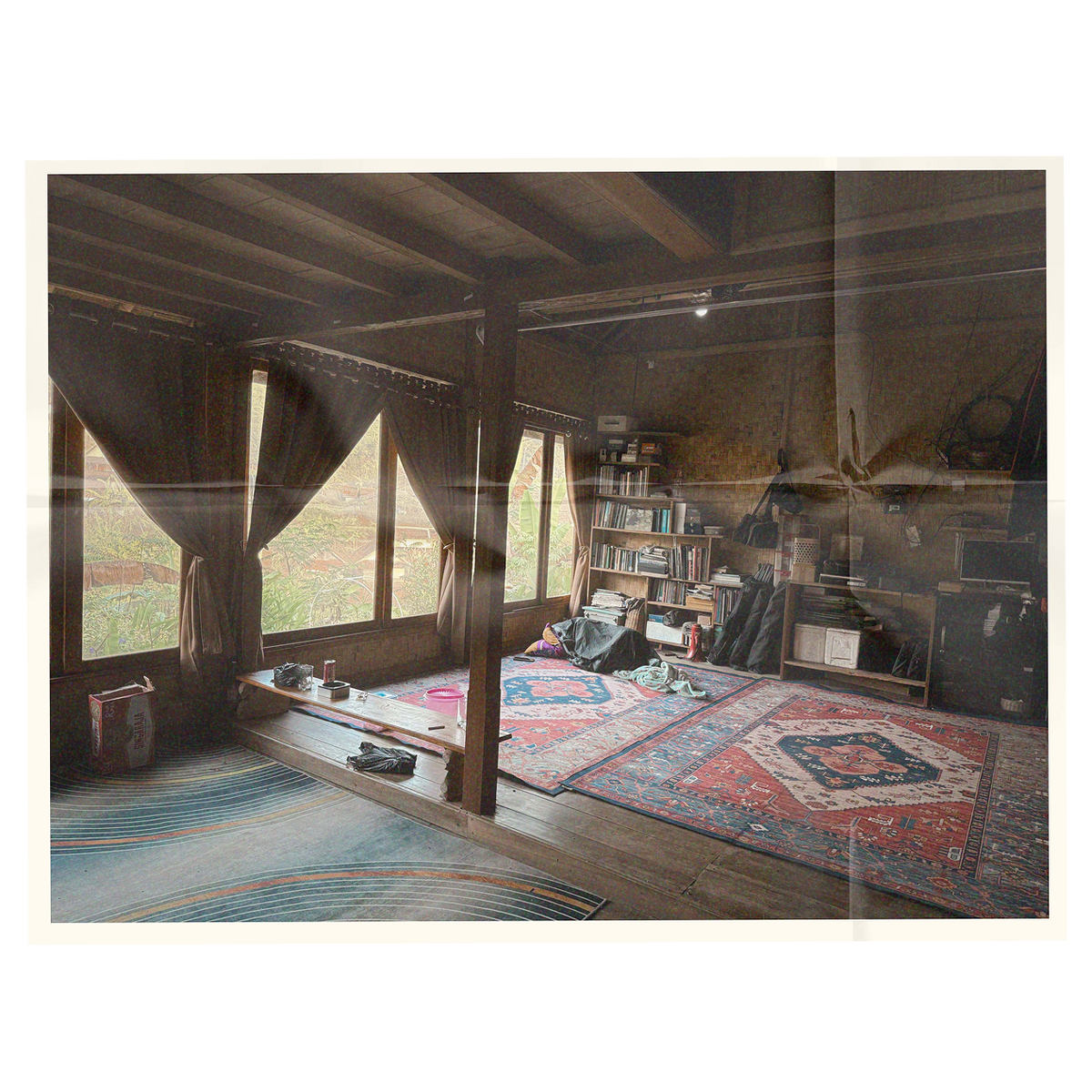
My eyes devour what is easily the most bizarre collection of objects I have ever seen in a contained space. Electric guitars, mortar shells, radio transmitters and all sorts of gadgetry are strewn alongside traditional artefacts and framed portraits of forefathers. Devices in various stages of dismantling. Cables and tools littering the ground. It’s a scene that begins in The History Channel and then abruptly curdles into prop room strangeness.
I can hardly make sense of it all, but now it is our turn to meet Abah. We shuffle forward in single file, still in cross-legged position, inching our bottoms across the carpet and extending our pressed palms toward Abah in the formal greeting style that Kang Yoyo demonstrated.
We thank Abah for welcoming us, foreigners on iron horses, into his sanctuary. He smiles, but doesn’t say much. Kang Yoyo explains that Abah is probably the most progressive leader of the Kasepuhan, teaching himself electronics from YouTube, building drones out of an old toy car’s remote control, and strategizing signal boosters so that villagers can reach their relatives with walkie-talkies.
PUNCAK PASS
Corridor to the capital
I have an interesting story to share over breakfast. Last night, as we bedded down on mattresses laid side by side under the thatched roof, I watched a cat play with something along the walls, before wandering over to curl up over my legs. In the middle of the night, I kept waking to the feeling of paws padding over my body, but when I looked, the cat was never there.
We ride down the mountain and back into the noisy organism that is Java traffic. It’s all tarmac from now on, as we leave Abah’s part of the world for the familiarity of convenience stores, bottled water and artificially flavoured ice pops.
There is a version of this story I could have told, about an indigenous village persisting in some pure state, uncorrupted by the wickedness of time and technology. Clean arc, sure, but almost entirely untrue.
In fact, in Gelar Alam we discovered a complete deference to nature alongside a practical embrace of hydro-electric turbines. A rice basket that cannot be moved for anyone's convenience, in a village that has uprooted 20 times because the ancestors said so. Cigarettes that don’t kill because they are a direct line to the spirits. A community that opens to outsiders while staying unshakeable in their identity.
Maybe the balance that Kang Yoyo spoke of isn't the absence of contradiction; it's the willingness to hold two true things at once without needing either one to win.


