
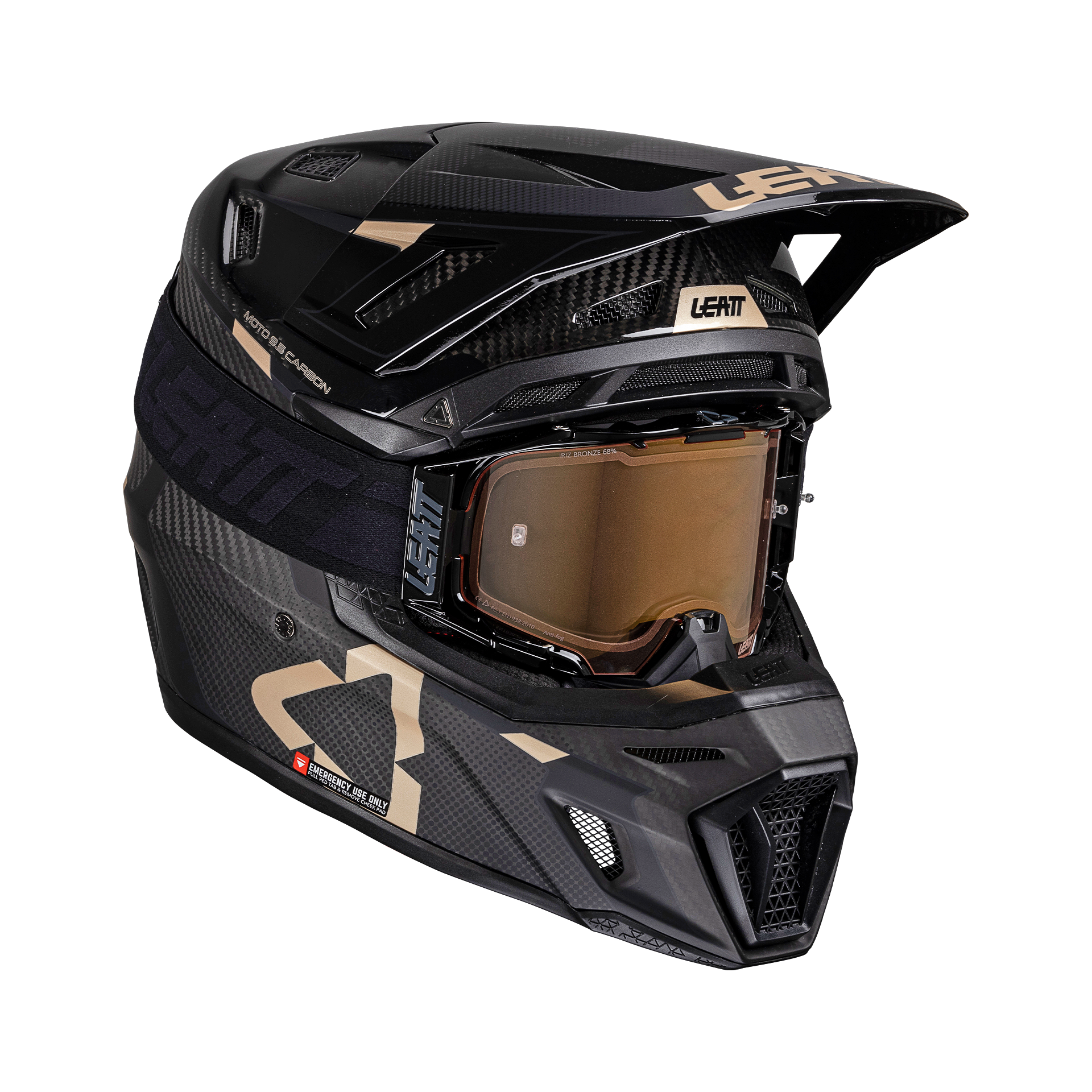
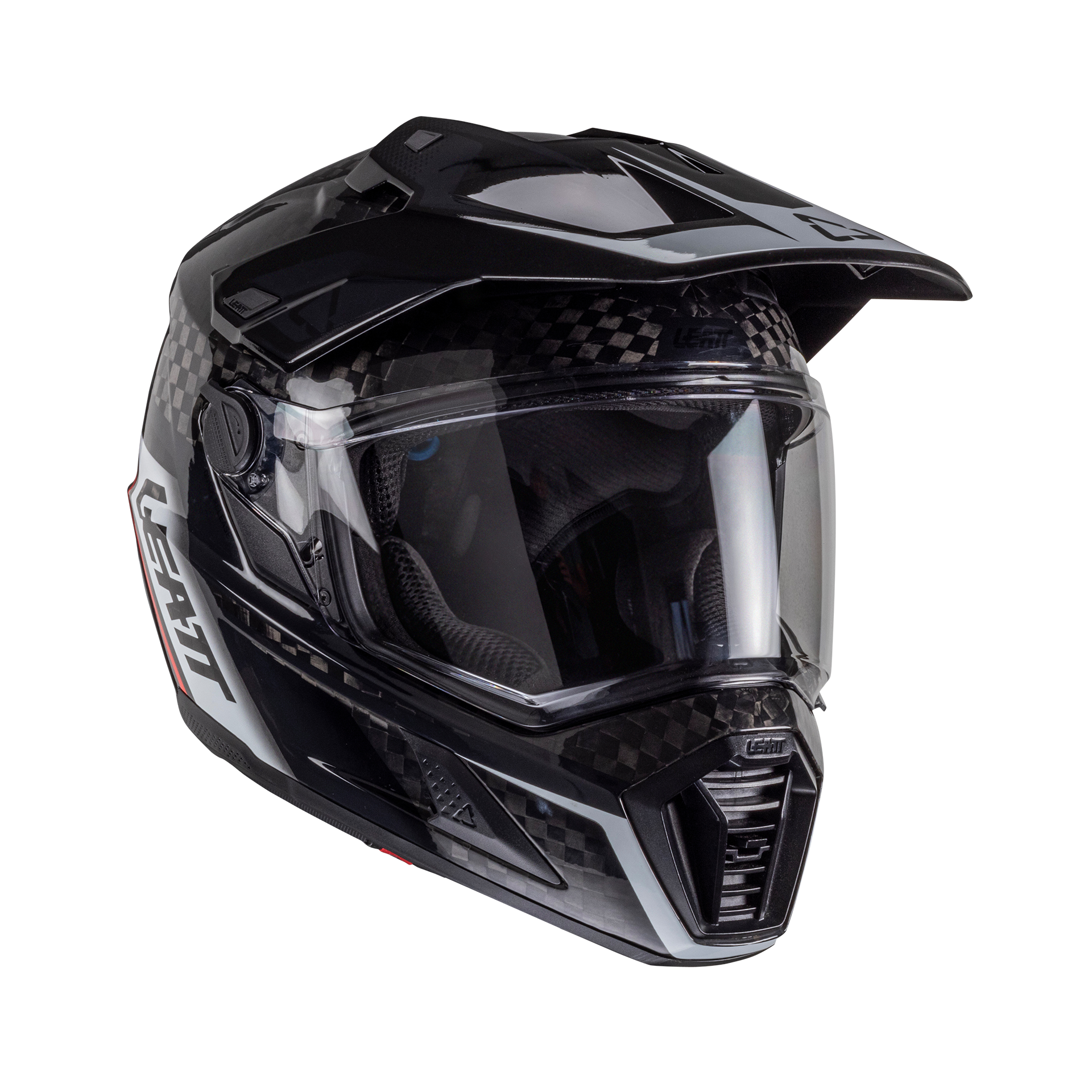


ADV 9.5 HELMET
GOGGLES OR FACE SHIELD? DOES IT MATTER?
Which setup works best for your ride? It’s all very well having the option to run one or the other, but how do you know which one to choose? Here are some tips to help you decide…
Dust: Goggles
If you’re heading into somewhere parched, with not much vegetation to keep the dust down, then opt for goggles. They seal more tightly against your face to keep fine particles out of your eyes when the dust hits.


Slow technical terrain: Goggles
If you’re hitting slow technical trails with panic-inducing inclines, and you need to work hard to muscle the bike about, then pick goggles. Goggles are much less likely to fog than face shields – they have better airflow, and you’re much less likely to mist things up with your own panicked breath. It’s hard to explore the unknown if you can’t see it.


Speed: Face shield
Got somewhere you need to be in a hurry, and the going is smooth? Being chased out of town by an angry mob? A face shield is better when you’re cranking it: above 80kph (50mph) goggles can become uncomfortable – wind buffeting, noise, and the seals can lift – which is part of a whole exciting world of ‘things you don’t want to happen above 80kph’. The face shield is built for high speed action – it’s the clear choice.


Sunshine and showers: Face shield
Speaking of clear choices, if the weather really hasn’t decided what it’s doing, a face shield is the best option, especially if the riding is steady away. A photochromic shield like the one on the ADV 9.5 Carbon will automatically darken in bright sunlight to ease comfort and protect the eyes, and will lighten quickly to maximise visibility if the sun hides, so you can avoid any unexpected surprises.


Heavy rain: Face shield
If you’re out in the middle of nowhere, and you experience the pitter-patter of tiny raindrops in your helmet, then you’ll be fine in goggles. If the rain starts coming down in buckets and you wonder if you should’ve brought a boat instead, then a face shield is going to be your friend. Rain hits a shield and runs off, but with goggles it hits the lens directly and the foam seal saturates. In light rain, goggles are fine – but for heavy rain, pick the face shield.


The mistake is deciding before you leave.
Of course, on any ride, you never know what you’re going to encounter – even the best weather forecast can be wrong, and the best laid plans often go astray. It’s good be able to have both to hand, and keep your options open in case of unforeseen circumstances.


