Which is the right motorcycle
boot for adventuring?

Motorcycle boots are often the last thing riders think about, but if they’re chosen badly they’re often the first thing they regret. Whether it’s a weekend spent exploring, or a month-long expedition across the unknown, a poor boot choice will remind you of itself every hour of every day - and if you crash, maybe every day after that.


Footwear doesn't just affect comfort; it makes a huge difference to control, safety, and for how long you can keep riding
Here is what actually matters:
ADV Riding Demands a Different Kind of Boot
Adventure riding presents protection challenges unlike any other motorcycle discipline. You need a boot that can handle the impact forces and ankle flex demands of offroad, that can perform predictably on the highway, stay dry in heavy rain and when fording rivers, and remain comfortable enough to walk around in when you park the bike for the evening.


Five Questions Before You Buy
1. How much offroad do you realistically ride?
Be honest about the ratio of tarmac to trail in your typical ride. A rider doing 80% road with occasional dirt tracks needs something fundamentally different from someone splitting time equally between tarmac and trail. A boot that gets you through a rocky mountain pass might feel like overkill on a motorway. A boot that feels light and effortless on road might feel precarious the moment a trail turns loose.
2. How much ankle protection do you actually need?
Ankle injuries are among the most common in motorcycle crashes, and they range enormously in severity.
What you are looking for, beneath the spec sheet, is two things: something that absorbs impact energy at the ankle, and something that physically limits how far the ankle can flex before ligaments get damaged. A flex limiter is not a comfort feature. It is an engineering decision that sits between you and a recovery you do not want to have.
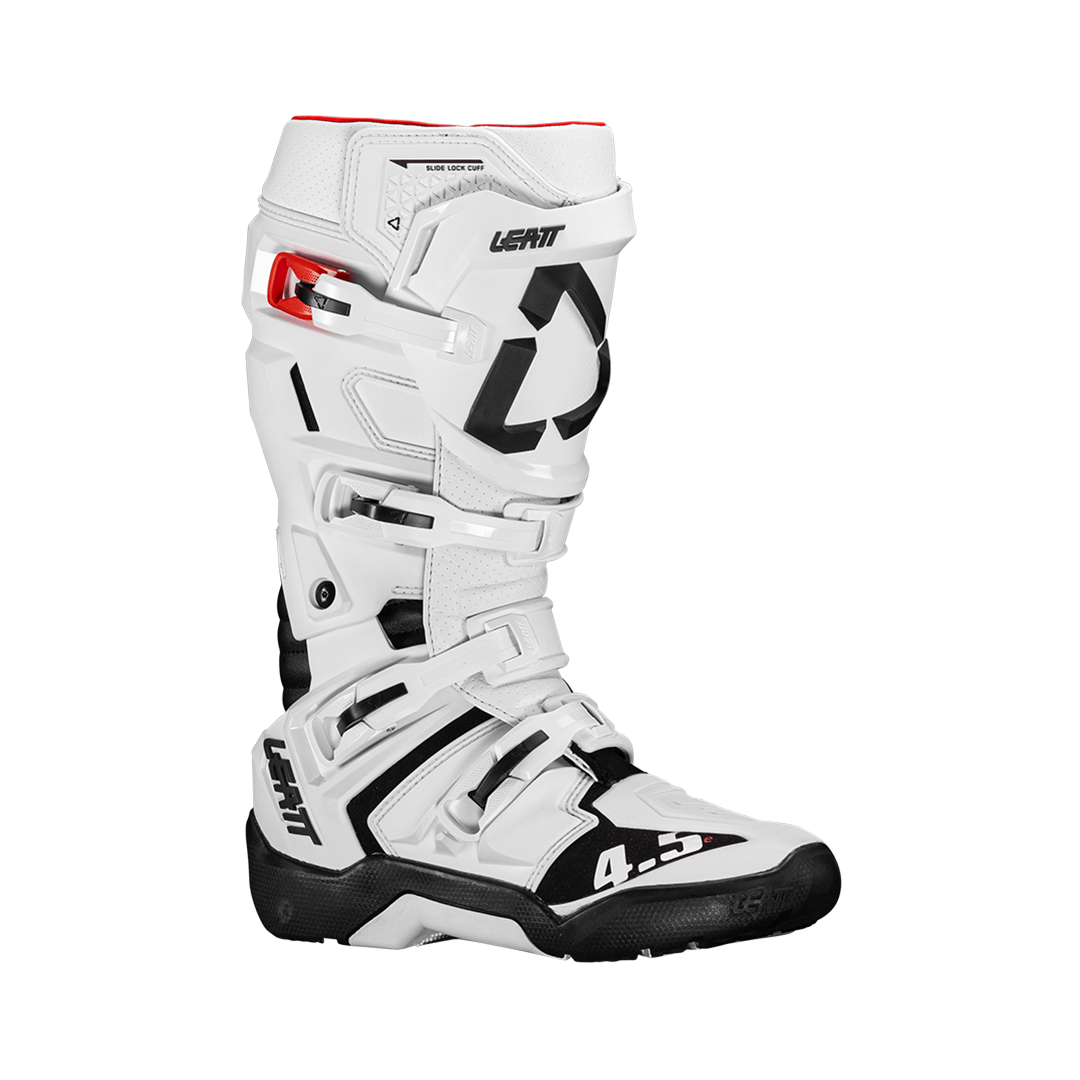
All three Leatt ADV boots include 3DF impact foam in the ankle area and a medial flex limiter. The difference between them is how much of the structural chassis surrounds those elements.
3. Do you need to keep dry from the inside, or the outside (or both)?
The truth is, you cannot have full waterproofing and maximum ventilation in the same boot. Physics is quite sure about this.
For most moto travel, waterproofing usually wins out over ventilation. Rain or rivers are inevitable on longer trips, and soggy feet compound misery. A slightly warm boot is annoying, but soaked, coldfoot is demoralizing in a way that is hard to explain until you have experienced it.
If you ride mostly in hot, dry climates and rain is genuinely not a factor, a ventilated boot like the ADV 7.5 X-Flow makes more sense: Nubuck leather chassis, perforated upper, maximum airflow. Light, breathable, and honest about what it is.
For everything else, choose a boot with a waterproof membrane and accept that the trade-off with breathability is worth it.
4. How do you keep your boots on if you come off?
Buckle systems on adventure boots are not just about how easy they are to pull on. They need to keep the boot from being ripped off your foot during a crash. Look for systems that combine secure mechanical buckles with a top-of-boot seal. Leatt's SlideLock system stops the boot from opening at the top during a fall when debris can enter. It also helps keep the boot securely on your foot!
5. Do you have sole?
Sole design matters more than you might think, and it’s all about control. You communicate with your motorcycle through your feet - gear lever, brake, pegs - and a sole that is too soft or the wrong compound can turn precise inputs into vague approximations. Leatt ADV boots use a sole pattern designed for grip on and off the bike, with a shaped toe box that makes gear changes consistent rather than effortful.
The Leatt ADV Boot Range: 3 boots, 3 types of riders
Leatt ADV X-Flow 7.5 Boot
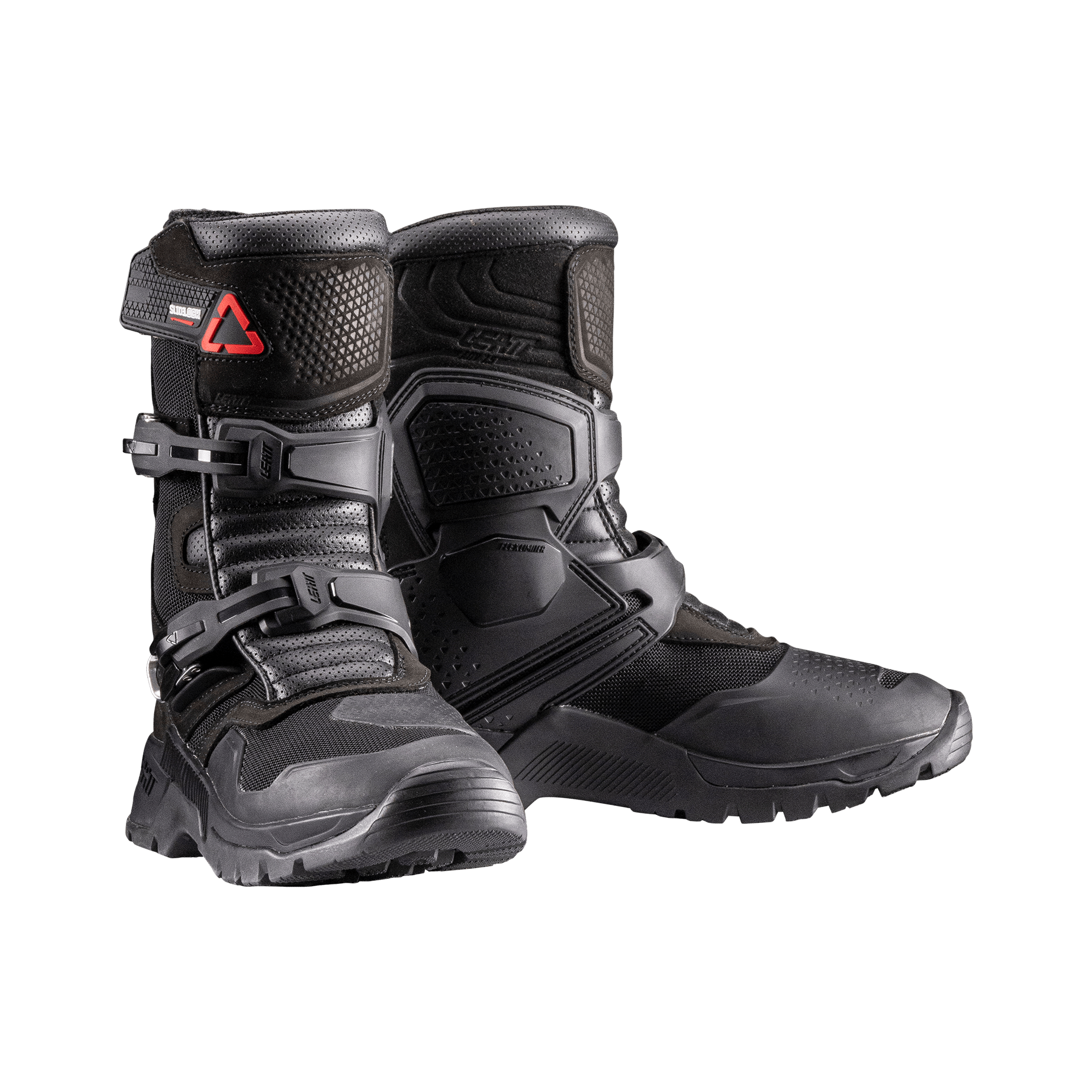
A lightweight, airy boot for warm-weather riders for whom overheating is a bigger risk than rain. Also available in a short version.
Leatt ADV HydraDri 7.5 Boot
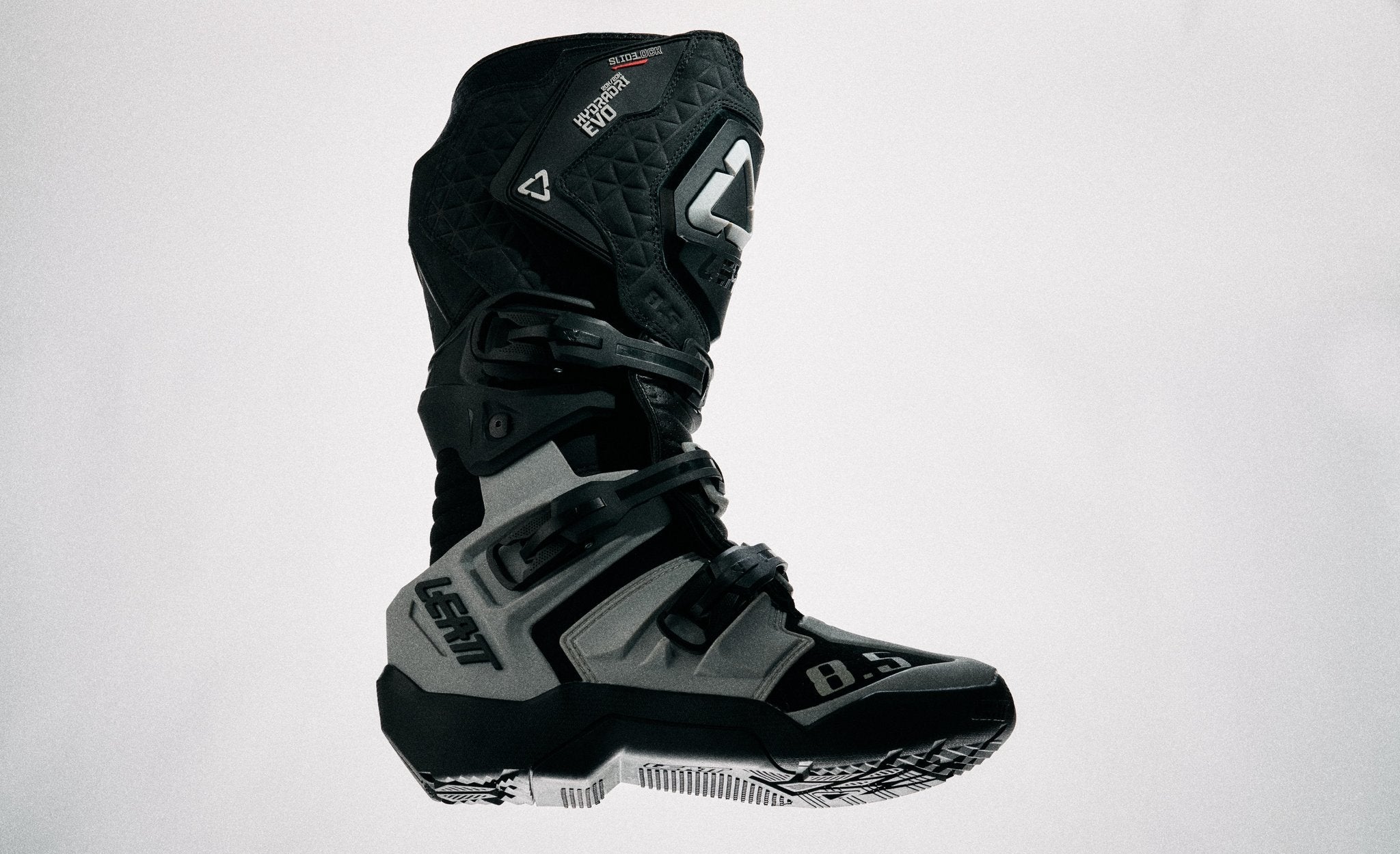
A do-it-all favourite. Full waterproofing via the HydraDri EVO membrane, Nubuck leather, forged aluminium buckles, and the full protection package – for road-heavy adventure touring. Also available in a short version.
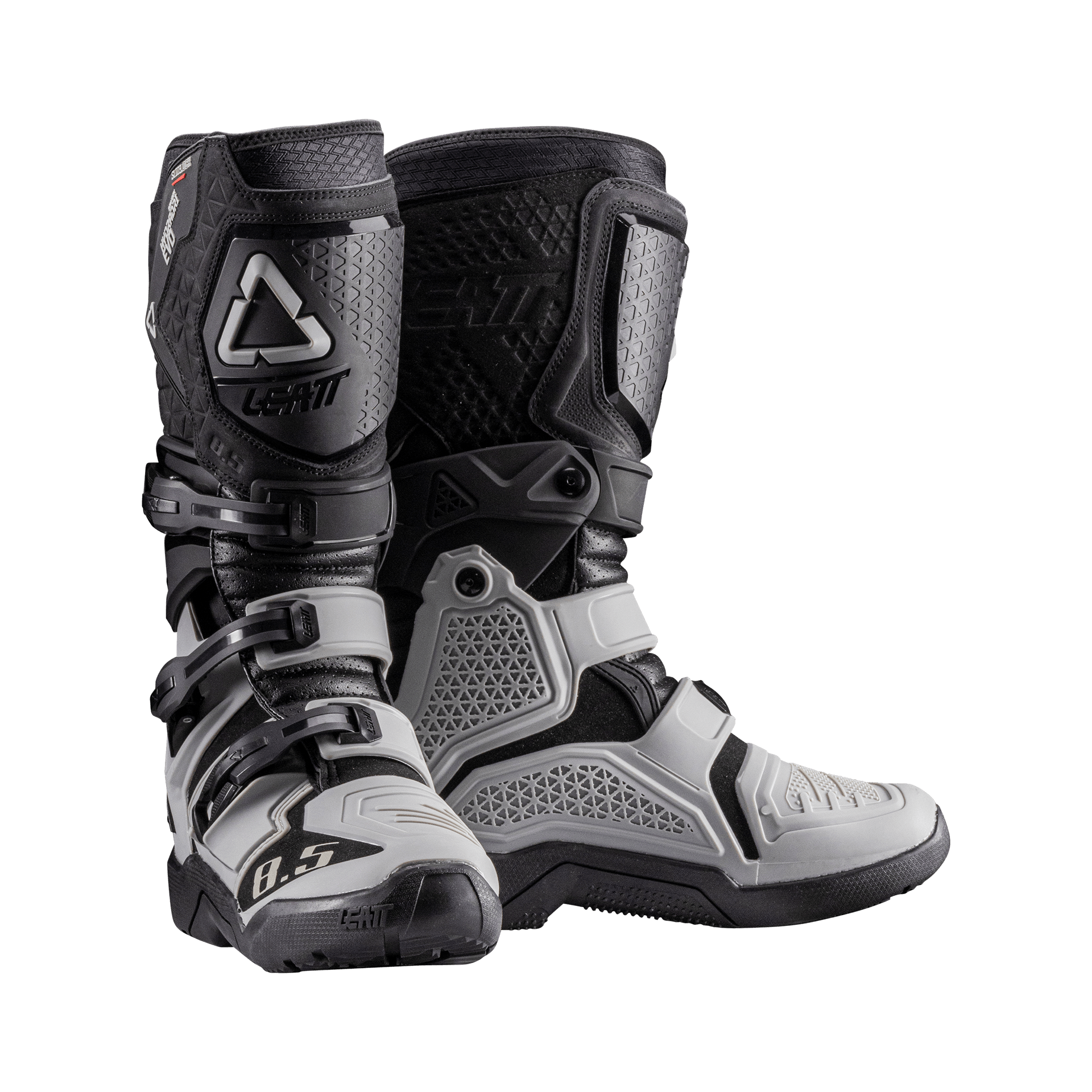
Leatt ADV HydraDri 8.5 Boot
The ultimate offroad expedition boot, for riders who don’t turn back.
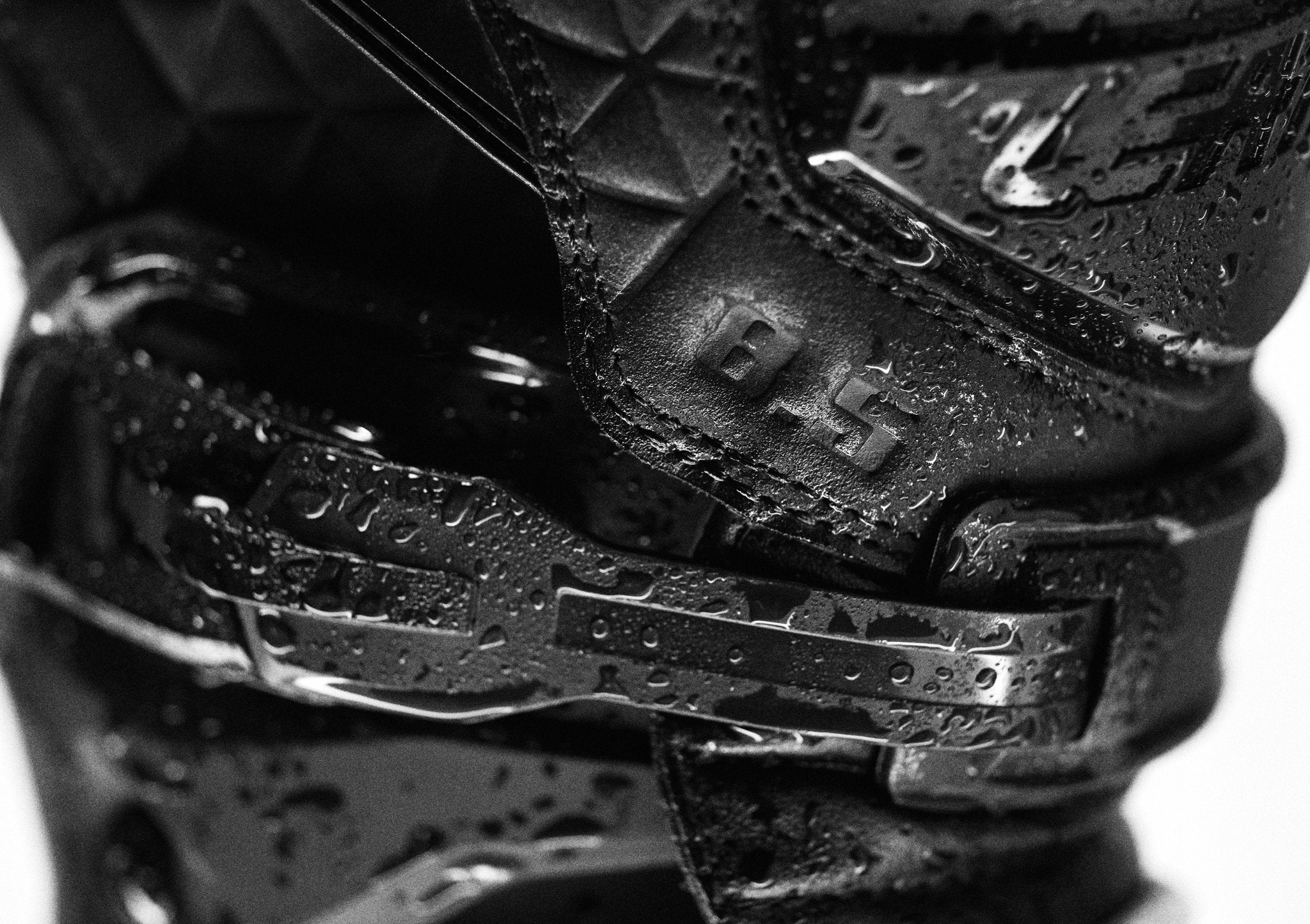
This is the most protective boot in the Leatt ADV range. Compared to the others, the shin plate is larger. The chassis is stiffer. The ankle section provides a level of structural security you simply don’t find in a conventional adventure touring boot. The sole - a dual-zone design borrowed from Leatt's enduro lineage - delivers proper peg feel and excellent grip in conditions where other ADV boot soles quietly give up.
Where the 7.5 starts from an adventure-touring brief and adds off-road capability, the 8.5 starts from enduro architecture and works backward toward travel comfort. The lower section has the structural armor of an off-road boot. The upper is comfortable Nubuck leather, so you can push long days. The whole boot is lined with HydraDri EVO membrane and closed with three buckles and the SlideLock system.
If you plough through rough terrain, have a history of ankle injuries, or just want to stop thinking about your feet when things get spicy, the 8.5 is your answer.
What CE Certification EN 13634:2017 Actually Tests
Leatt ADV waterproof boots are CE certified to EN 13634:2017, the European standard for protective motorcycle footwear. It is worth understanding what this certification covers – it is not just a general endorsement of quality.
The standard tests four specific properties: abrasion resistance of the upper material, impact cut resistance (resistance to being cut under impact), transverse rigidity (resistance to compression from the side - relevant in crash scenarios), and ankle protection (resistance to hyper-flexion). Each property has a Level 1 and Level 2 rating, with Level 2 offering higher protection. The ADV 8.5 attains level 2 on all 4 properties tested – the highest certification possible.
When you see EN 13634:2017 certification on a boot, it means the boot has been independently tested against these criteria to a defined minimum standard. It is a meaningful benchmark, not a marketing label. When you see EN 13634:2017 2222, it means the boot has exceeded all of the benchmarks.
Matching Boot to Rider: A Practical Decision Framework
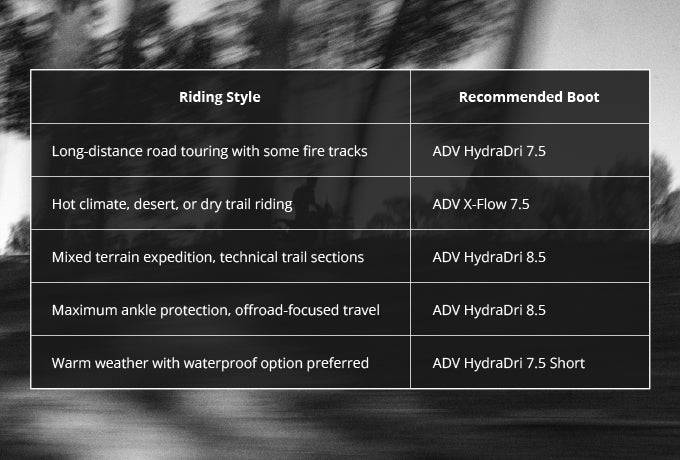
The Boot You Choose Sets the Floor for Everything Else
Helmets and jackets tend to get more attention than boots. This is understandable - they are more visible, after all. But on a long ride, your boots are in constant use. They matter every time you put a foot down, stand on the pegs, grip the bike, change gear, or simply walk to your rest stop at the end of the day. And in a crash, they are the last line of defence for one of the most vulnerable joints on the human body.
The right boot will not make you a better rider. But the wrong one can end your trip early, or end your season altogether. It's worthwhile to get your boots right before you leave.